Skincare is halal when it contains no forbidden or impure ingredients, such as pork derivatives or intoxicating alcohol, and is produced under clean, controlled conditions. The most reliable way to know is a halal certificate from a recognised certification body, because the ingredient list alone does not show where each ingredient comes from.
What makes a cosmetic product halal?
A halal cosmetic product meets three conditions:
- Permissible ingredients: no pork or pork-derived ingredients, no ingredients from animals that were not slaughtered according to Islamic rules, and no intoxicating alcohol.
- Clean production: the product is made on equipment that has not been contaminated with impure (najis) substances.
- Verified supply chain: every ingredient, including processing aids you never see on the label, has been checked.
Ingredients to check on the label
Many common cosmetic ingredients can come from either plant or animal sources. The label rarely tells you which, so these are the ones to look out for:
- Collagen and elastin: usually derived from animal skin or bones.
- Gelatin: often from pork or non-halal slaughtered animals.
- Glycerin (glycerol): can be plant-based or animal-based.
- Stearic acid and stearates: can come from animal fat or vegetable oils.
- Keratin: usually from animal hair, horns or feathers.
- Squalene: traditionally from shark liver; plant-based squalane from olives is an alternative.
- Hyaluronic acid: historically extracted from animal tissue; today mostly made by fermentation.
- Carmine (CI 75470): a red colour made from insects, which many scholars and certifiers do not accept.
Is alcohol in skincare haram?
Not every "alcohol" on a label is a concern. There are two very different groups:
- Ethanol (listed as alcohol, alcohol denat. or ethyl alcohol) is the intoxicating type. It is the main concern for halal-conscious consumers and is also drying for the skin.
- Fatty alcohols such as cetyl, stearyl and cetearyl alcohol are waxy, non-intoxicating ingredients that soften the skin. They are generally considered permissible by halal certifiers.
Scholars hold different views on small amounts of synthetic ethanol in external products, which is one more reason to rely on certification. ANAAKA products are free from drying alcohols.
Is vegan skincare automatically halal?
No. Vegan products contain no animal ingredients, but they can still contain ethanol, and their production is not checked for halal standards. Halal certification covers both the ingredients and the production process.
Why halal certification is the only reliable proof
A "halal" or "alcohol-free" claim on the packaging is not the same as certification. A certificate from a recognised halal body confirms that the ingredients, suppliers and factory have been inspected. When shopping in Saudi Arabia and the Gulf, look for certification to GSO 2055-4, the Gulf standard for halal cosmetics, and check that the certificate covers the specific product.
How ANAAKA makes halal skincare
ANAAKA is halal-certified by IIDC GmbH, an independent halal certification body. IIDC GmbH audits ANAAKA's formulas and Italian production site against GSO 2055-4, the Gulf halal cosmetics standard, as well as the OIC/SMIIC and MS 2200-1 standards, and re-evaluates the certification every year. ANAAKA has been certified by IIDC GmbH since 2018. You can view the current certificate on our Halal Certificate page.
- Halal-certified formulas, made in Italy.
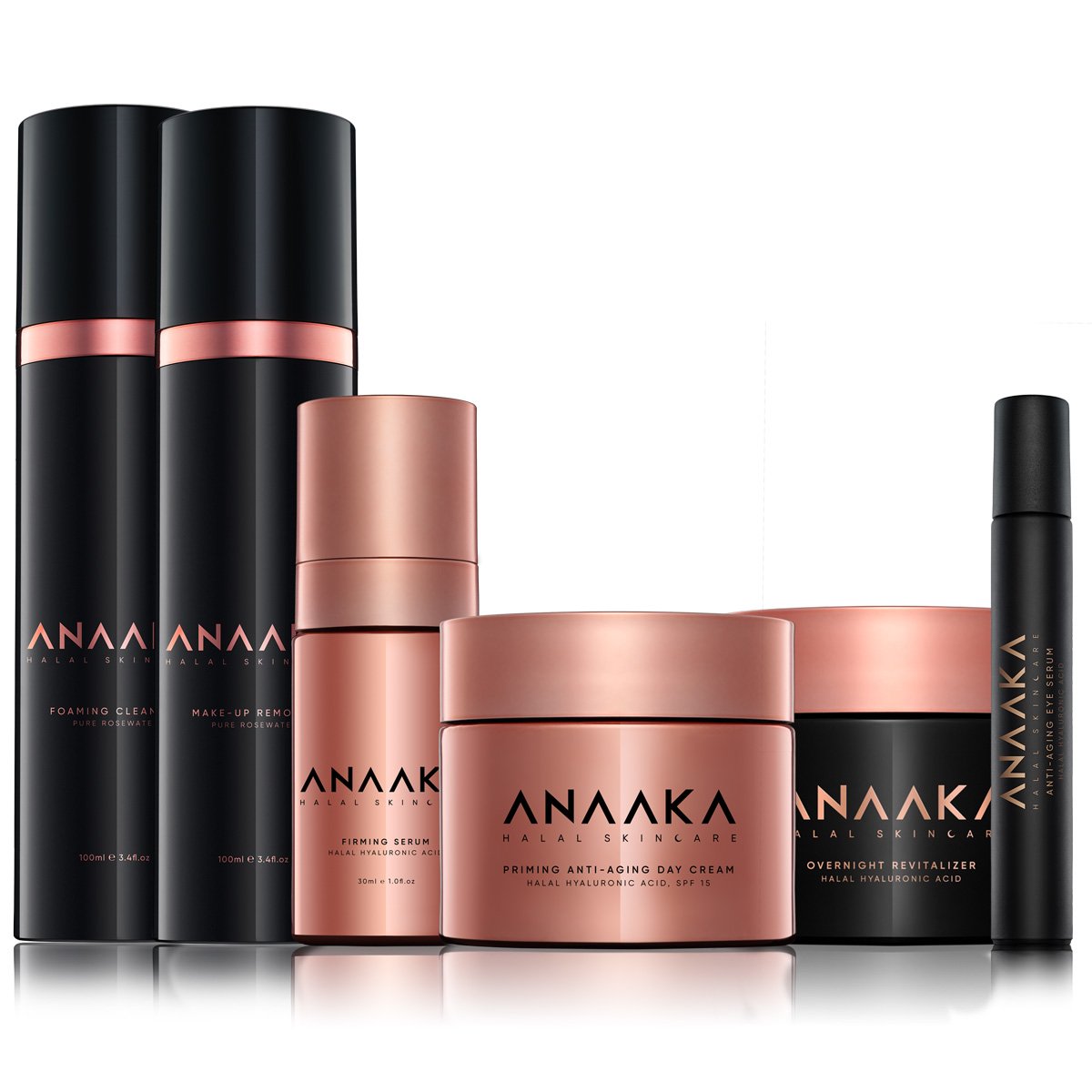
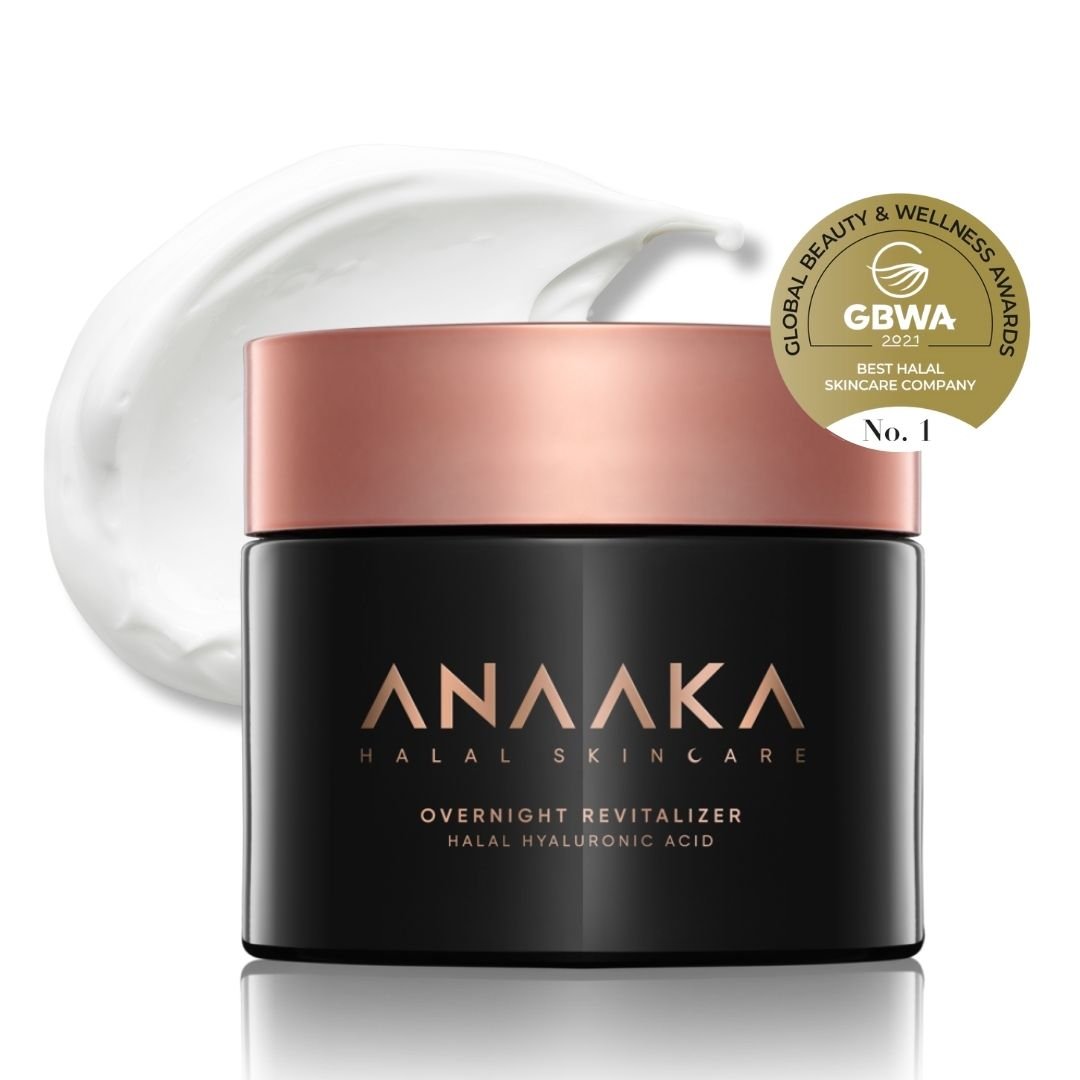
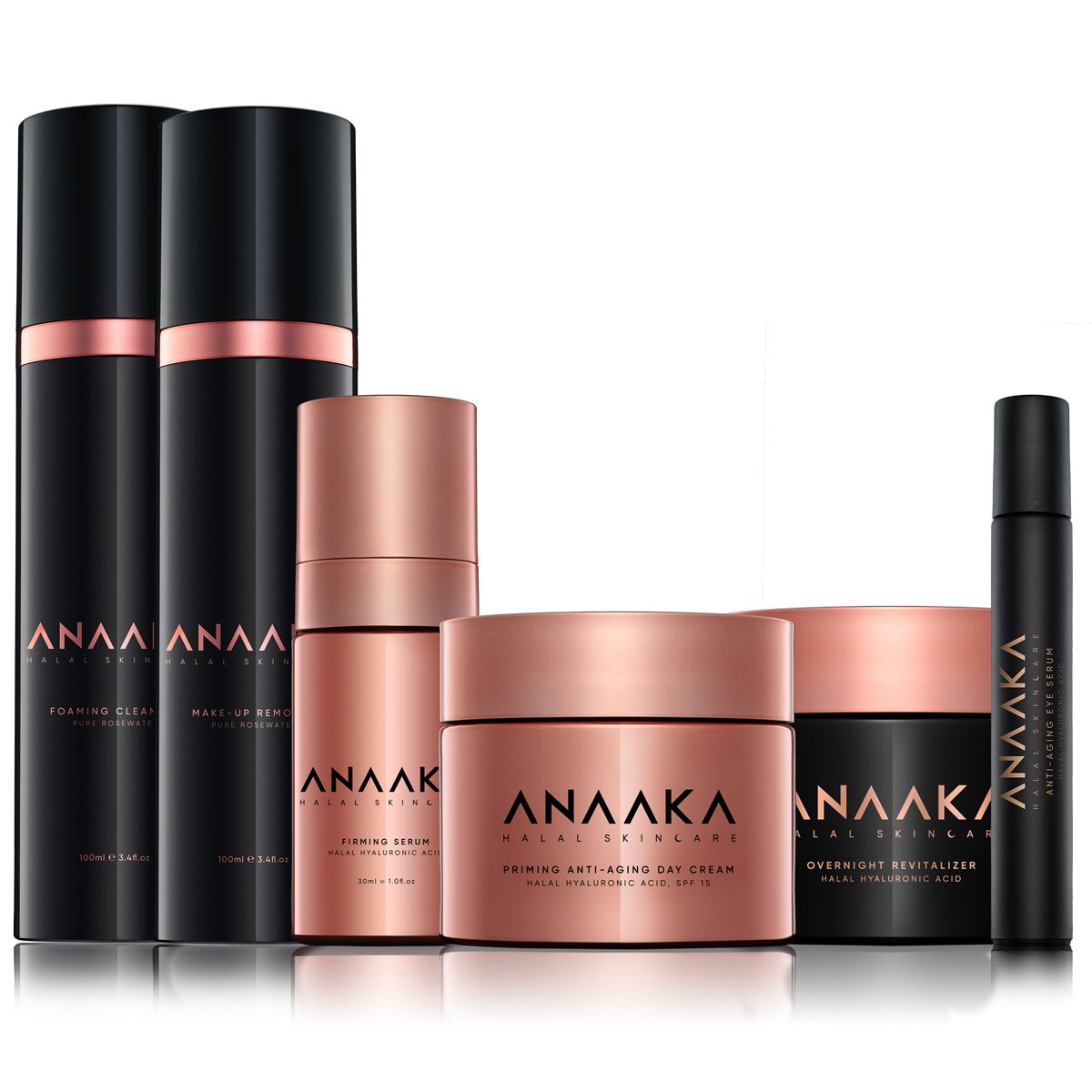
- Halal-certified hyaluronic acid in the Firming Serum, Eye Serum, Priming Anti-Aging Day Cream SPF 15 and Overnight Revitalizer.
- Halal-certified rose water in the Foaming Cleanser, Makeup Remover and Firming Serum.
- Peptides instead of collagen: copper tripeptide-1 supports the skin's own collagen, so no animal collagen is needed.
- No drying alcohols and never tested on animals.
Build a complete halal routine with The Light Collection Al-Nur, or start with the Double Cleansing Pack. Explore the full halal skincare collection.
Frequently asked questions
How can I tell if a cosmetic is halal?
Check for a halal certificate from a recognised body. Reading the ingredient list helps, but it cannot show whether ingredients such as glycerin or collagen come from permissible sources.
Is cetearyl alcohol halal?
Cetearyl alcohol is a non-intoxicating fatty alcohol, usually derived from plant oils, and is generally considered permissible by halal certifiers.
Is collagen in skincare halal?
Only if its source and processing are halal-certified, since most cosmetic collagen comes from animals. Peptides are a halal-friendly alternative.
Does skincare affect wudu?
Many scholars say products that form a water-resistant layer, such as nail polish or waterproof makeup, can stop water from reaching the skin, while creams and serums that absorb fully do not. For a ruling on your situation, ask a qualified scholar.
What is GSO 2055-4?
GSO 2055-4 is the Gulf standard for halal cosmetics and personal care products, issued by the GCC Standardization Organization. It sets requirements for ingredients, production and hygiene.
Are ANAAKA products halal?
Yes. ANAAKA skincare is halal-certified by IIDC GmbH to GSO 2055-4, OIC/SMIIC and MS 2200-1, made in Italy, free from drying alcohols and cruelty-free. See the current certificate on our Halal Certificate page.
Who certifies ANAAKA as halal?
IIDC GmbH, an independent halal certification body, which has certified ANAAKA since 2018 and re-evaluates it every year.